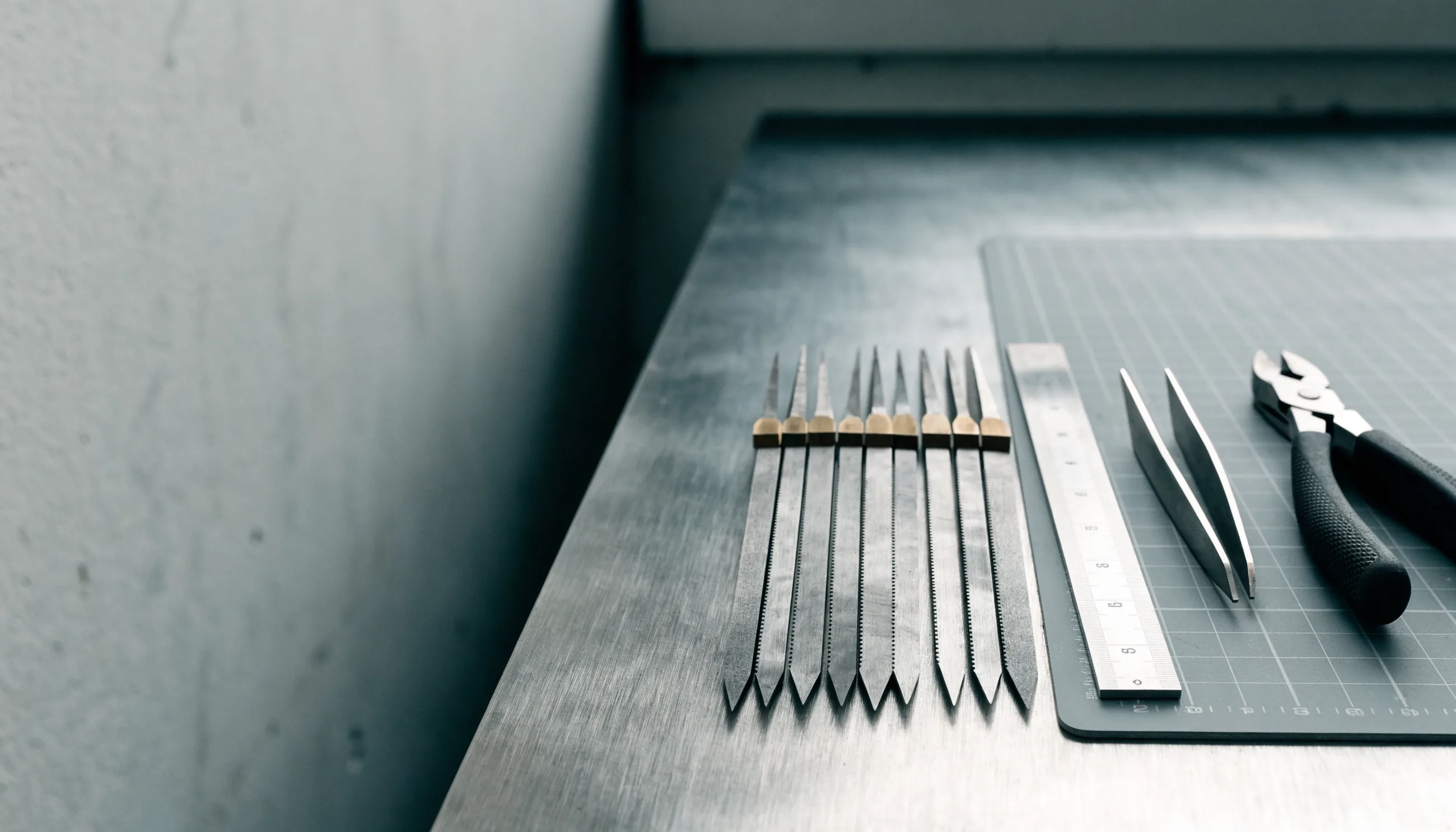
Bench tools for scale model making
Bench tools, to a stated tolerance.
Single-edge sprue nippers, needle files and abrasive film, tweezers and clamps, calipers, rules and dividers, mats and parts storage. Every page states what the tool fits and how long it lasts before it needs replacing — including the check you use to tell.
Free shipping over $75 · Ships in 3-6 business days · All prices in USD
Fitment, stated
File tang, jaw opening, mat thickness, rule graduation, stated accuracy — on every page.
An edge life, not a guess
An expected range, plus the wear check you use to know it is finished.
Packed to arrive straight
Mats flat between boards, files separated, nipper jaws guarded.
30-day returns
Unused and in original packaging, on a prepaid label. No restocking fee.
The tools to buy first
Start here
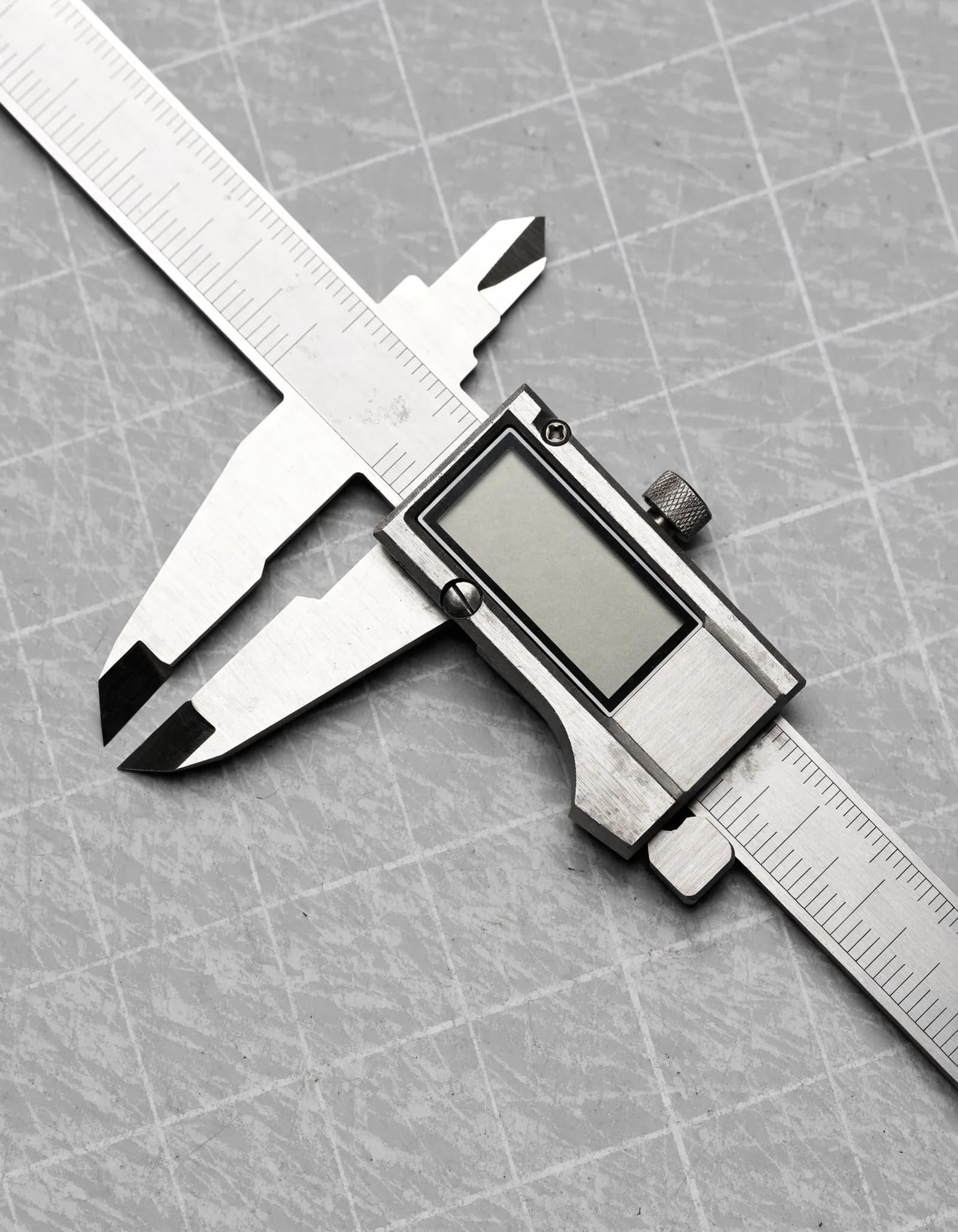
The specification
Three things every product page tells you.
Most shops tell you a tool is professional grade. We would rather tell you it is 11-speed and 5.62 mm across, that it weighs 252 grams at 116 links, and that it is finished somewhere between thirty and sixty cuts. You can decide about professional yourself.
Read the materials- What it fits
- File tang and handle bore, jaw opening, mat thickness, rule graduation, stated accuracy. The numbers you check against your own bench before you spend anything.
- How long it lasts
- A range with the conditions that move it, and the wear check that settles it — a point dragged across a fingernail, a rinsed sheet, a fresh cut in a corner of the mat.
- What it will not do
- The block most shops leave out. What one cut through wire does to a nipper, why a needle file snaps at the tang, what heat does to a self-healing mat — stated before you buy.
5 categories, 17 items
By category
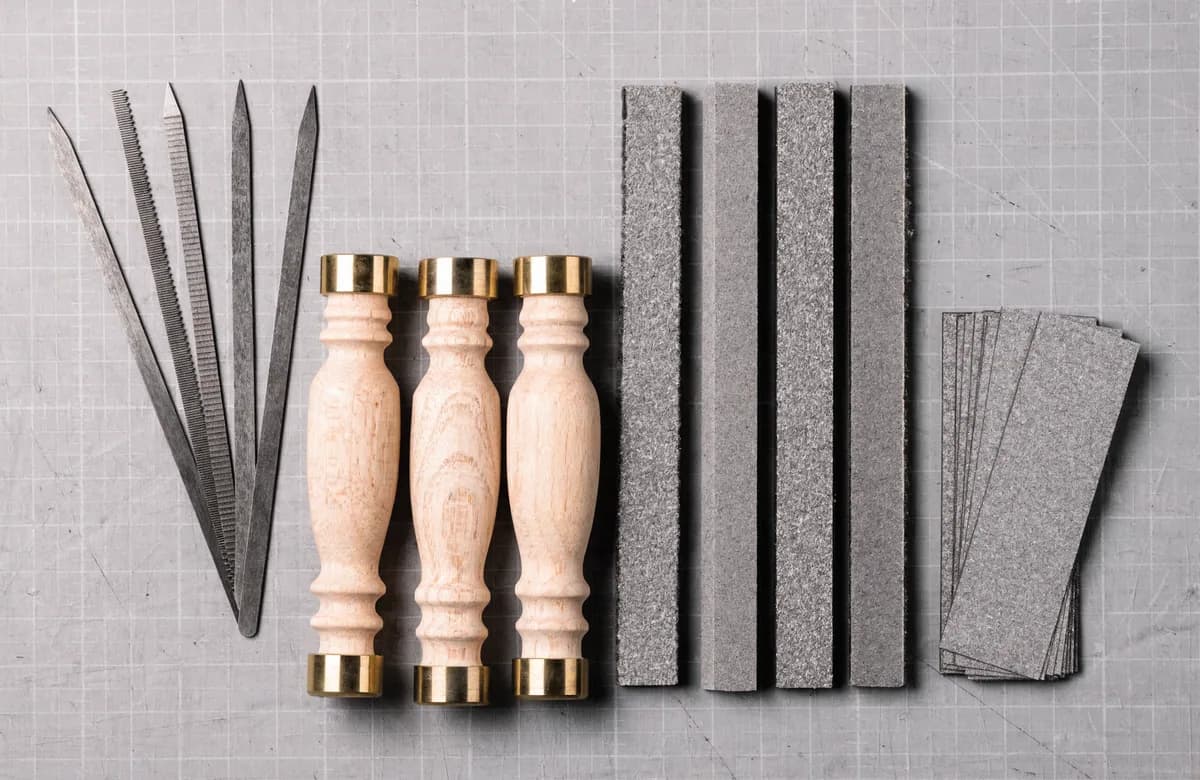
Files & Abrasives
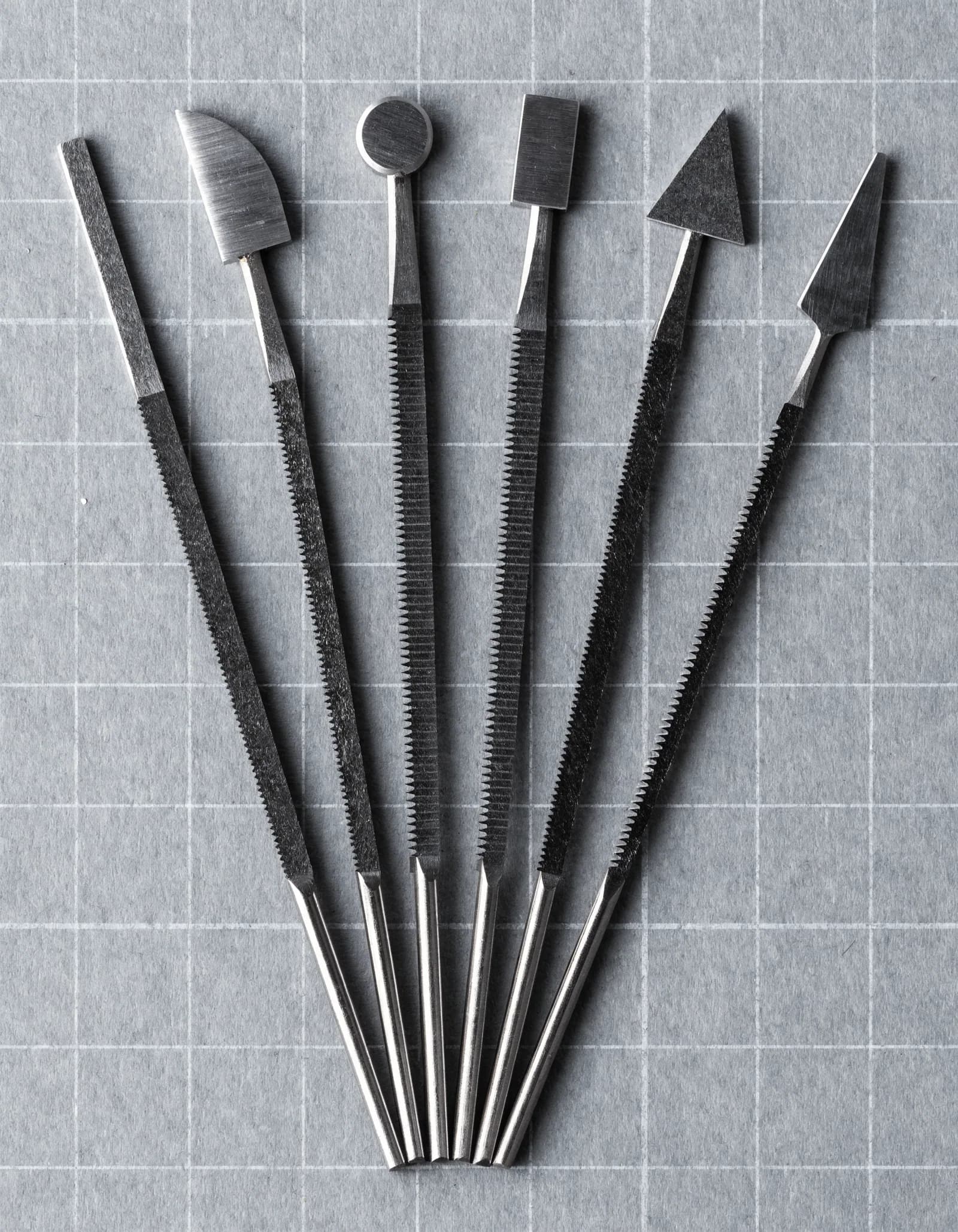
Needle files, sanding sticks, abrasive film in graded sheets and a polishing set. Cut and grit are stated as numbers rather than as coarse, medium and fine, so two products can actually be compared.
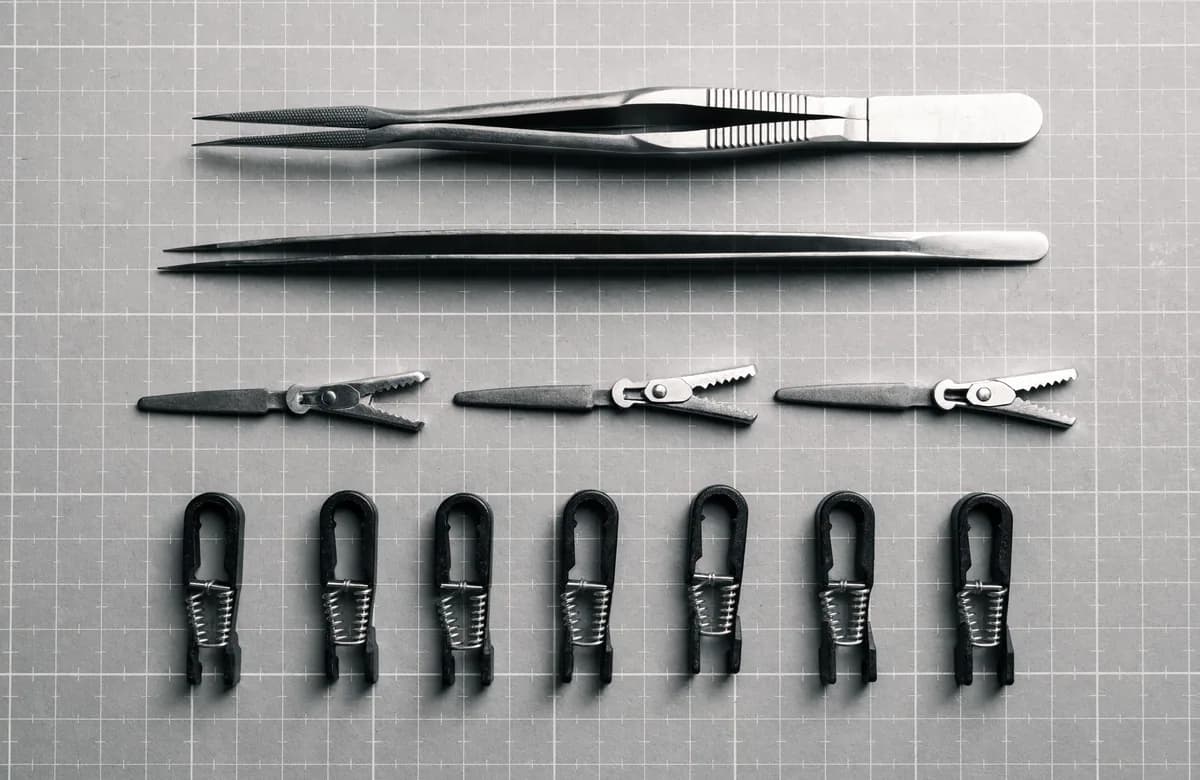
Holding & Clamping
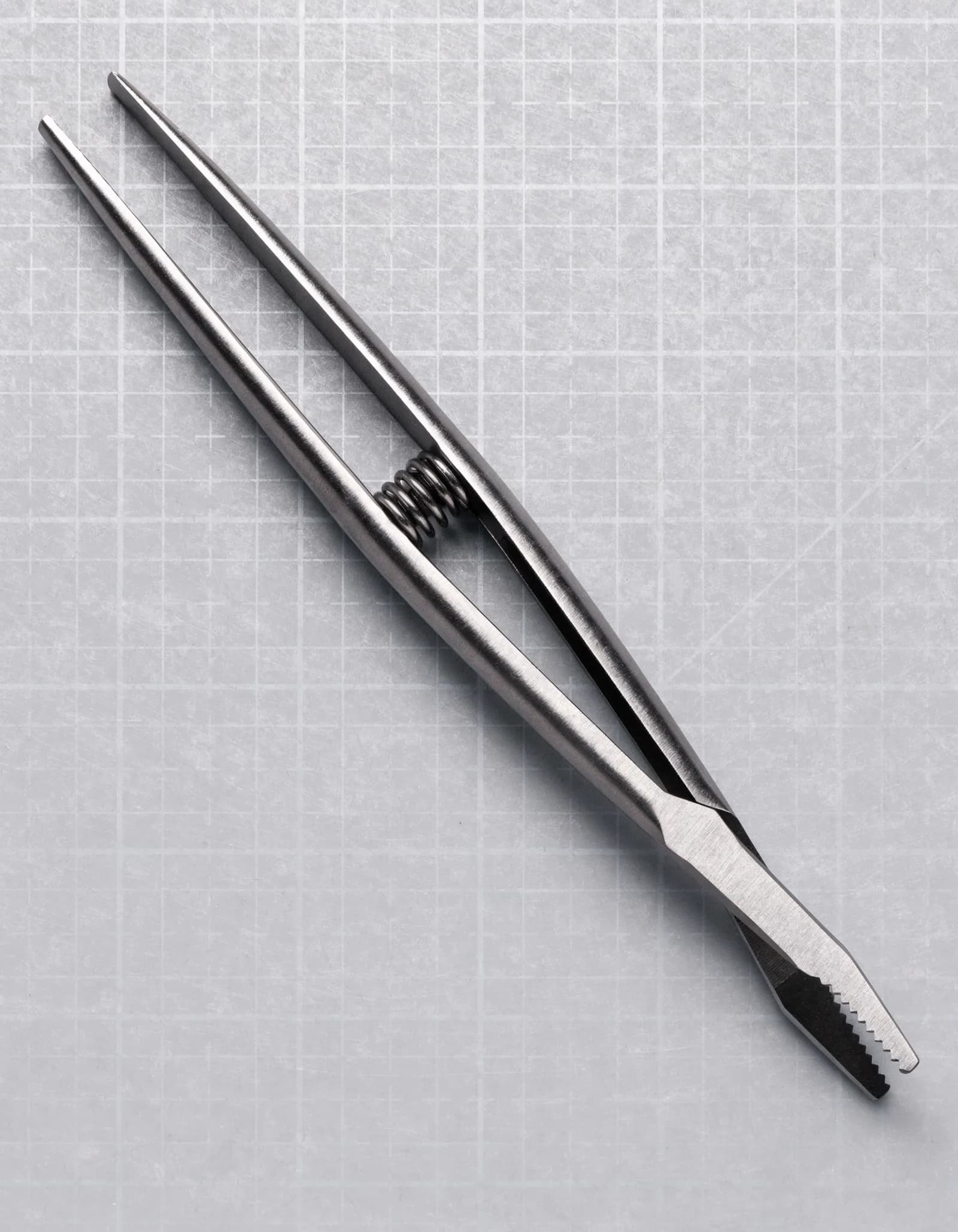
Reverse-action tweezers, fine-point tweezers, painting handles and spring clamps. The tools that hold a part still so both your hands are free for the one doing the work.
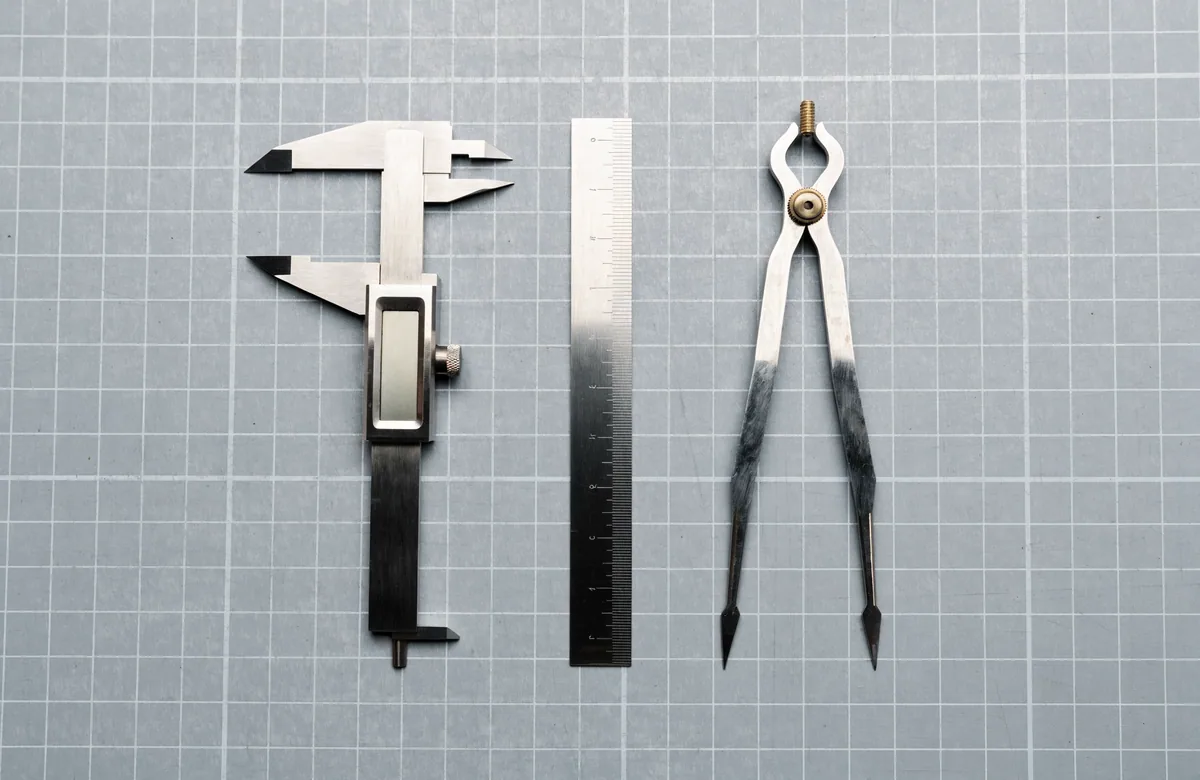
Measuring & Marking
A digital caliper, a scale rule and a set of spring dividers. Graduation and stated accuracy are on the page for each, in the units you will actually work in.
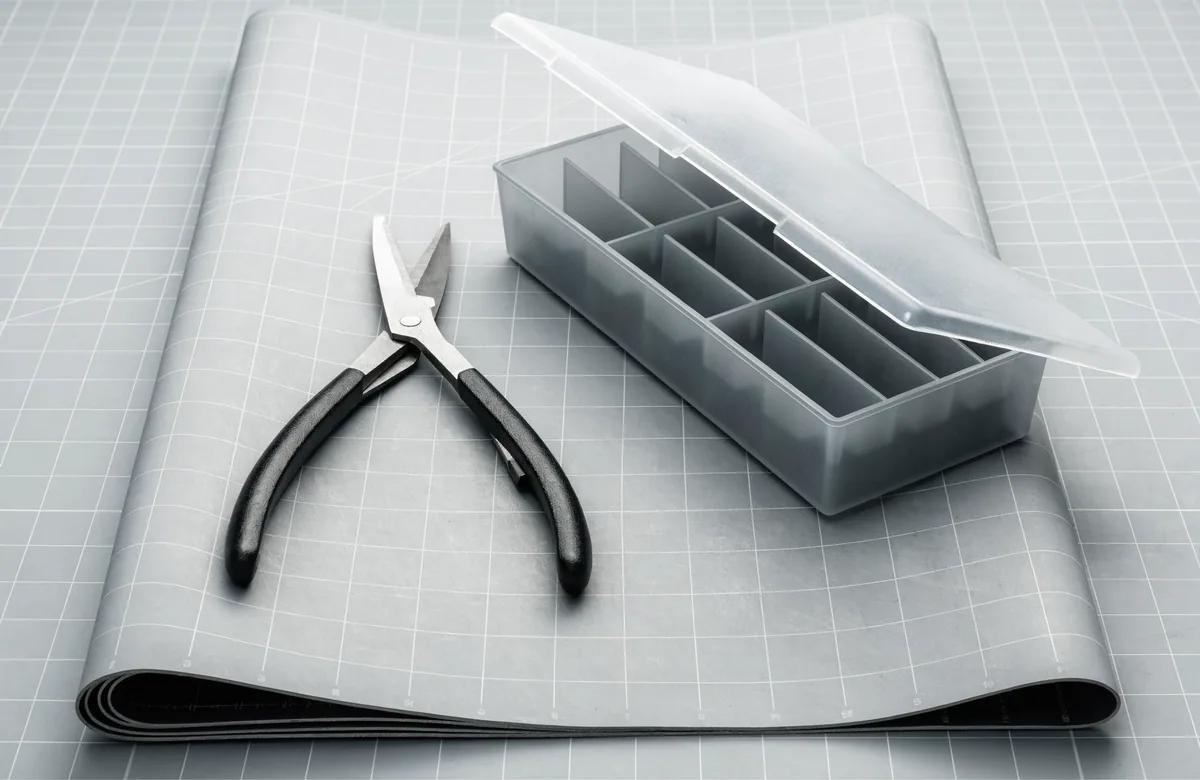
Nippers & Bench
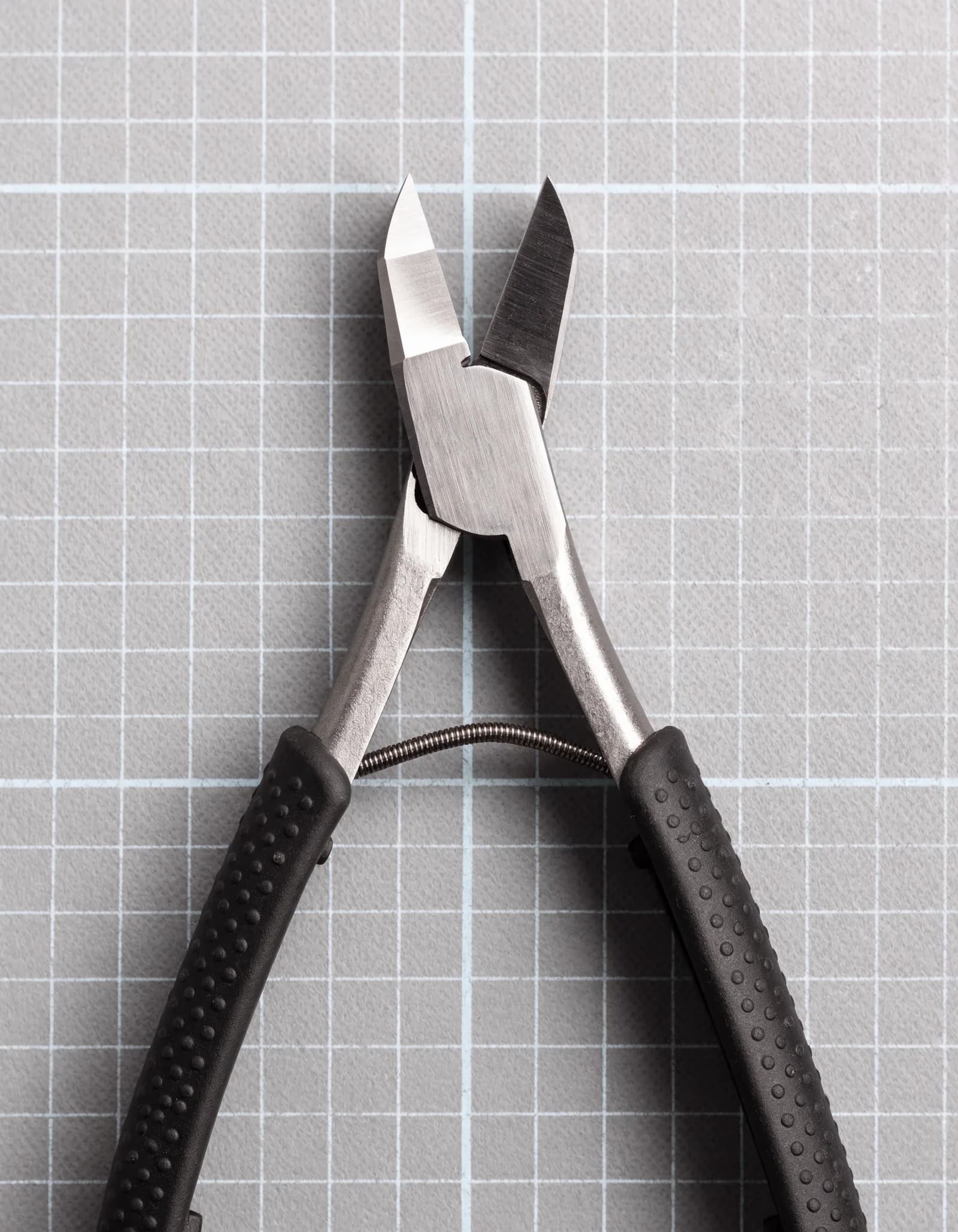
Single-edge sprue nippers, self-healing cutting mats and a sorting tray. What takes the part off the sprue, the surface you do it on, and the place the small parts go so they are not lost.
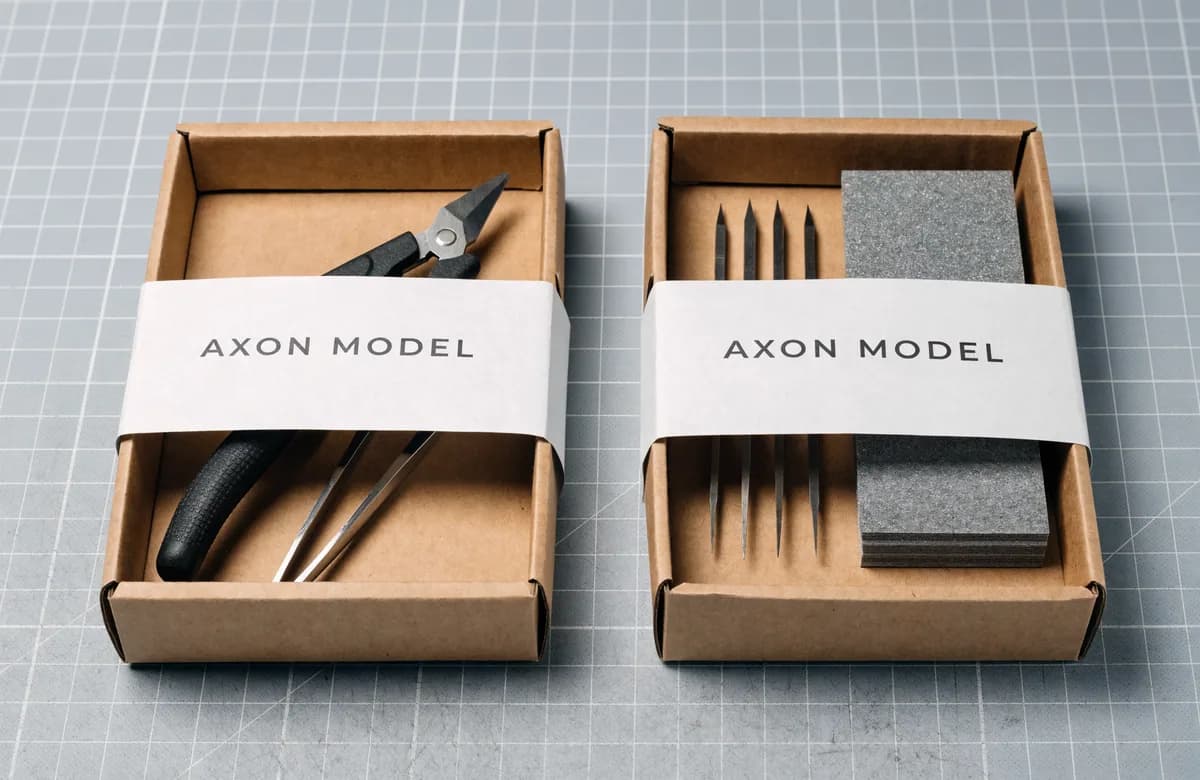
Kits
Bench kits priced below the sum of their parts. Every kit lists exactly what is inside it and what each item costs separately.
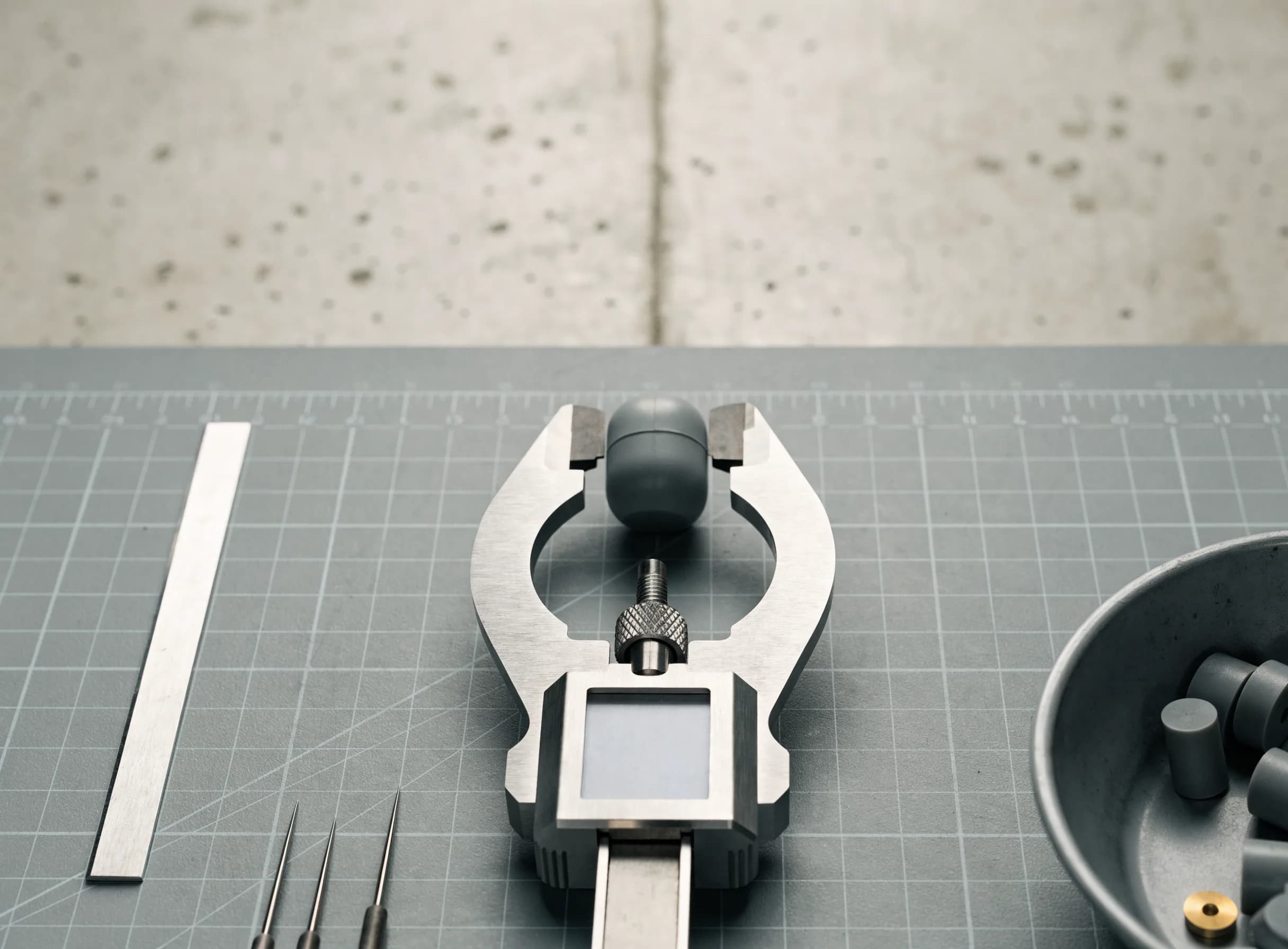
How an item gets here
Four stages, and the numbers survive all of them.
Everything that decides whether a part is worth fitting happens in these four steps. Knowing what they are is the difference between receiving a consumable that wears out on schedule and believing you received a faulty one.
- 1
Specified
Cut number, grit grade, stated accuracy, jaw opening. We publish the number we will be held to rather than the one that sounds best.
- 2
Cautioned
Every page says what the tool is not for — the metal that ends a nipper, the lever that snaps a file — before you are asked for a card.
- 3
Packed
Mats flat between boards, files separated, nipper jaws guarded, tweezers points-down. Packed to arrive the way it left.
- 4
Rated
Service life is published as a range with the wear check attached, so you can tell for yourself when a tool is finished.
7 materials
We work in a short list of materials.
A short list, chosen because each does something the others cannot. Carbon tool steel takes an edge stainless will not, stainless will not spot or pick up a magnetised part, abrasive film keeps its grade to the end of the sheet, and beech takes a ferrule without splitting. Nothing here is a substitute pretending to be something else.
How each one behavesCarbon Tool Steel
High-carbon steel hardened to roughly 60 HRC and left uncoated. It takes a far finer edge than stainless and holds it longer in plastic, and it will spot with rust if it is put away damp. That trade is deliberate: an edge you can strop back is worth more at this scale than one that never marks.
Cut File Steel
Hardened carbon steel with the teeth cut rather than milled, which is what gives a needle file a clean shear instead of a scraped surface. Cut number is stated on every file. Teeth are brittle by design; a file used as a lever snaps at the tang.
Stainless Steel
Non-magnetic austenitic stainless used for tweezers, rules and caliper jaws. It will not spot, it will not pick up a magnetised part, and it is softer than tool steel — a stainless tweezer point bends before it breaks, which is the behaviour you want when you drop one.
Abrasive Film
Graded aluminium oxide on a polyester backing rather than on paper. The backing does not soften or tear when wet, so the same sheet works dry on plastic and wet on filled surfaces, and the grade stays honest to the end of the sheet instead of wearing down to something finer.
Self-Healing PVC
A three-layer mat with a soft core between two harder skins. A blade parts the core, which closes behind it, so the surface stays flat instead of collecting the tracks of every previous cut. It heals cuts, not heat or gouges — the limit is stated on the product page.
Steamed Beech
Close-grained European beech, steamed and turned, used for file handles and sanding blocks. It is dense enough to take a ferrule without splitting and light enough not to unbalance a small tool. Left unlacquered so it takes on the shape of a grip rather than sliding in one.
Engineering Polymer
Polypropylene, ABS and glass-filled nylon used where a part has to flex without taking a set, or hinge a few thousand times without whitening: tray lids, sanding stick cores, jaw guards and clamp bodies. It is chosen per part rather than bought as one plastic, and each product page names which one it is.
30-day returns
Unused and in original packaging, on a prepaid label we send you. That includes a tool that turned out not to mate with what you own.
Free shipping over $75
Standard delivery in 3-6 business days. Tracking on every order.
Arrived damaged
Send a photograph within 14 days. Replaced or refunded in full including shipping — and nothing to post back.